
Leaderboard
-
The Unknown Poster
MembersPoints26533Posts -
-
-



Popular Content
Showing content with the highest reputation on 12/13/18 in all areas
-
Needs for next year
SPuDS and 4 others reacted to TBURGESS for a post in a topic
5 pointsIf Nichols, our starting QB, with years of experience, already warmed up in the game, could have hit a wide open Adams in the end zone we might have beaten Calgary too. Blaming the loss on a rookie QB throwing his first and only pass in his first playoff game after coming in cold from the bench is ridiculous.5 points -
Needs for next year
Tracker and 2 others reacted to Doublezero for a post in a topic
3 pointsThat knee injury really impacted NIchols effectiveness this year - it meant he couldn't run. And before 2018 started, running was an aspect to his game that he stated he wanted to improve. But comparing the two QBs - which results are you talking about? Win vs loss? If so, then you also need to tag Nichols for those two losses vs Sask where he single-handedly handed wins to the Riders by repeatedly throwing the football to the wrong team. Those two losses are more directly attributable to QB play than are most of Nichols wins. The only win that Nichols could possibly take credit for was the 29-21 win vs Stamps Oct 26 and even then, it was Bighill that made the game changing play. How about measuring QB performance by scoring output? Streveler passed for 11 TDs and ran for another 10 - significantly outscoring Nichols who played way more but only managed 18 TDs. Strevelers passing efficiency percentage also is up there with Reilly and Masoli whereas Nichols is very average. Then you need to look at who is a rushing threat - Streveler runs with the big dogs - Masoli and Reilly - whereas Nichols ran 15 times the entire season for a total of 52 yards. That stat really demonstrates his unidimensionality and underscores his overwhelming averageness.3 points -
3 pointsFor several reasons, I want Nichols to to have a monster year where he goes off for like 5000+ and just tears the league a new *******. Now, having said that, I don't think this "ball control" offense that we've been employing the last few years is necessarily conducive to big yardage totals. Having said that, as long as the wins are there and it's entertaining football game in, game out, then I'm all in....3 points
-
3 pointsJust because he lifted a tent in your pants doesn't mean he lifted the team as much as you think he did. Nichols is still a better qb than Streveler and the results show that. Yes Streveler did well for a rookie and showed a lot of potential, but he's still young and has to keep progressing. I think he will personally but you just never know.3 points
-
Random News Items
blue_gold_84 and 2 others reacted to JCon for a post in a topic
3 pointsGod forbid you're a slave elf! Can't even become a dentist because it's your job to paint the darn toys! Commies!3 points -
classic Bomber game: 1984 home game vs. BC
SpeedFlex27 and 2 others reacted to WBBFanWest for a post in a topic
3 pointsJust don't get all man-crushy on him and start calling him "Big Huff".3 points -
Random News Items
blue_gold_84 and 2 others reacted to The Unknown Poster for a post in a topic
3 pointsI had this debate with my gf who believes the song is not appropriate today. I think we have to be really careful about censoring creative works. And especially in the PC era (and I dont mean that in a bad way because I dont rail against common decency/respect as an attack of the PC police). But, this happened with Money For Nothing a few years ago because ONE person complained and didnt understand the point of the offending word in the song. Im 99.9% on the side of women (or more accurately 100% on the side of women in 99.9% of things). But many historians have said the song is not about coercion, but about the fact the woman wants to spend the night but is afraid of judgement. The perspective as judged by "the time" isnt that it was okay for men to coerce women, its that women had to play a role lest they be judged or "**** shamed". On its face, its playful. I would wager most adults have experienced playful moments of banter in romantic situations (both ways, not just man towards woman). If you read the lyrics its pretty clear what its about. But people pop out lines out of context. So, out of contest the offending lines are: "Say what's in this drink?" - but that follows her asking for another drink. The male replies that she should put on a record while he pours. The clear indication is not that he's slipping her a date rape drug but that he made her an extra strong drink. Next offending line: "I ought to say no, no, no". Her repeating the word "no" is not for emphasis. Its to keep the melody of the song. It follows her lamenting that she wished she could "break this spell". In other words, she wants to stay, she's enamored. She wishes she didnt want to. The line is immediately followed by "At least I can say that I tried". This isnt an example of a victim shrugging off an attack. Its her going through in her mind how she'll respond to people shaming her the next day. She repeats "no" in the next offending line: "The answer is no". This follows "I really must go." The male's response to both is "Baby, it's cold outside." Almost as if the writer purposely has a mundane, generic male statement that she is responding to. Why? Because she's not responding to him. She's talking to herself. She's trying to convince herself she should go. Have any of us been in that position? Heck yes. She immediately follows that line by complimenting the man. She is now back to addressing him (rather then internalizing). She tells him his "welcome has been so nice and warm". The man's response to this is to say he's lucky she dropped in (which tells us that she initially went to his home). It also tells us he's complimenting her, not forcing her to stay. His next line is "Look out the window at this dawn". This implied they've already spent most of the night together. That's a key line because it gives us context to the song. Its not a two minute conversation. It's a narrative of the evening. Its possible this narrative tells us her internalizing was her final thought process on whether to stay or not, clearly her choice. And the next lines referring to it being nice and warm and look at this dawn could be the AFTER of their coupling. The next lines are her being worried about what her family will think about her coming home so late (or the next day). She refers to her sister being suspicious, her brother waiting at the door and her Aunt having a "vicious mind". This is all about other people's reactions to her decision to spend the night. It could be read, again, as AFTER they've spent the night together and now she's laying there thinking about the consequences...the shaming and judgement. The male's response is to refer to her lips as "delicious" (this is 1) a compliment 2) confirming they have been intimate 3) a flirtation). She immediately responds by making another excuse to STAY (he never asked her to at this point...). She says a half a cigarette more. Again, giving herself an excuse to stay. She then goes back to saying she had to get home. If we accept the narrative that they have spent the night together, his next lines make sense "But baby, you'd freeze out there", "Its up to your knees out there". The weather is now worse than it was when she came over. She asks him to lend her a coat, implying again that the weather is now much worse than when she went to his home (and confirming some time has passed). She gives him a compliment that suggests she is getting ready to leave "you've really been grand". Her opinion of him is he's been great, its was a great night. Her next lines wrap up the narrative: "But dont you see, there's bound to be talk tomorrow, at least it will be implied". That tells us this whole routine is about her wanting to stay but fearing judgement and that she DID stay and is now fearful of that judgement. We could read it further as expressing the dichotomy between men and women where he simply has no understanding of how she will be judged because he's a man and she's a woman. That's the victimization in this song. Her last line is "I really cant stay" and he replies "get over that old out". She's reiterating that she cant stay because of the judgement and he's saying it doesnt matter, the judgement doesnt matter, he doesnt care what people think. I cant believe I just analyzed that song haha3 points -
classic Bomber game: 1984 home game vs. BC
HardCoreBlue and one other reacted to johnzo for a post in a topic
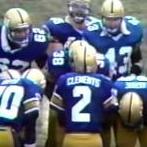
2 pointsThis game is against the Don Matthews / Roy DeWalt era Lions. They were the Stampeders of that era, a powerhouse team with great depth and zero weak points. BC Place was rough on visiting teams, with sellout crowds generating unprecedented noise and making Cal Murphy and Tom Clements sour in the media. From 1983-1987 the Lions were 60-23-1, losing the Grey Cup in 1983 and winning in 1985. We very rarely beat them. IMO we got kind of lucky during the 1984 Western Final because DeWalt was injured and he was the only guy the Lions couldn't easily replace. This game shows what the Bomber defence of the glory days could do at its absolute best. Ty Jones in particular was beasting and feasting. BC had -50 yards of net offence after the first quarter and -2 at the half. Tom Clements wasn't very sharp on the day but it didn't matter, our D was so dominant, Reaves hit the century mark by halftime, and Hufnagel had a real nice fourth quarter to get the save. If you're gonna vote in the all-time MBB team polls, watch this. Several all-timers and candidates here -- Jones, Poplawski, House, Cameron, Murphy, Boyd, Norman, Reaves ... weird to look back at a day when a Reaves wasn't a heel in Winnipeg...2 points -
Around the League: 2019 Off Season
rebusrankin and one other reacted to Noeller for a post in a topic
2 pointswhatever it takes for Calgary and Sask to finish at or near the bottom next year......get it done.2 points -
Around The NHL 2018/2019
Brandon and one other reacted to BomberBall for a post in a topic
2 pointsIf we're going to trade a 1st for him, I'd like to see him get more than 6 minutes a game.2 points -
Around The NHL 2018/2019
BomberBall and one other reacted to The Unknown Poster for a post in a topic
2 pointsIf Jets want a center at the deadline, they could do worse but I wouldnt give much. I'd much rather get Duchene for the playoffs if he doesnt sign in Ottawa2 points -
Needs for next year
SPuDS and one other reacted to bearpants for a post in a topic
2 pointsDiscussing Streveler: Wins don't matter... as longs as he's inspiring the team... Discussing Nichols: Who cares if he wins every game... have you seen his passing stats?!?2 points -
2 pointsBoth Steinhaure and Claybrooks defences are based on his defence so it’s easy to have him come in and call plays.2 points
-
Around The NHL 2018/2019
The Unknown Poster and one other reacted to iHeart for a post in a topic
2 points2 pointsAround the League: 2019 Off Season
Tracker and one other reacted to Jpan85 for a post in a topic
2 points2 pointsWrestling
ediger and one other reacted to The Unknown Poster for a post in a topic
2 pointsIts sort of an idea they are doing now with the offices in different regions. NXT UK. They just did a try out in Mexico and India I believe and want to open an office in Saudi Arabia. Ofcourse, their purpose is to control all wrestling in the world so the point wont be that NXT Middle East is a different style than NXT UK (there would likely be *some* differences because youre catering to different fans but generally the point is to teach the WWE way of working and the WWE way of writing and production to every one). This was actually a Shane McMahon idea years ago before he quit. Incidentally, he also wanted to do more internet based stuff and have an internet-based promotion/show. Sort of like NXT or 205live is now. Probably a coincidence how all Shane's "bad ideas" are now Hunter's "good ideas" lol2 pointsUS Politics
Wanna-B-Fanboy and one other reacted to do or die for a post in a topic
2 pointsWould of liked to been at that Congressional hearing about privacy and data collection to ask Goggle.....why, when I search "Liar"...... do I get pictures of Sarah Sanders?2 points2 pointsLittle more info on each guy2 pointsThe MBB All-Time Blue Bomber team
the watcher and one other reacted to TrueBlue4ever for a post in a topic
2 pointsThis is a fantastic history lesson, and highlights some of the intricacies and difficulties in doing a position by position poll over eras, which is hopefully part of the fun of this exercise. I cannot like this post enough - brilliant job!2 pointsThe MBB All-Time Blue Bomber team
MC and one other reacted to Stats Junkie for a post in a topic
2 pointsHere is a little history on the evolution of player positions In the early days, the wingline (O-Line) consisted of 1 x snapback (centre), 2 x inside wing (Guard), 2 x middle wing (Tackle) & 2 x outside wing (End) The backfield consisted of 1 x quarterback, 3 x halfback The final position was a flying wing (FW). Flying indicated that the player possessed the speed necessary to make end runs (similar to a halfback). Wing represented the physical stature needed to fill on the wingline. The combination of size and speed also made the FW the ideal candidate to take the snap from centre on an extension play (similar to rugby). Mid 1930's - the increased American influence saw the modern terminology for the O-Line come into vogue. The 3 HBs became 2 HBs and a FB (fullback). American coaches were used to operating an 11 man formation and they didn't know how to incorporate the FW. During the 1940's the FW often lined up as a flanker simply as a way of staying out of the way. By the late 1940's, the FW started to become more involved in the offence as a true flanker (receiver). 1955 - Winnipeg adopted a new backfield alignment. HB FB FB HB 1964 - Winnipeg became the last team to adopt a more modern look to the offence. The ends were now defined as a tight end (TE) and a split end (SE). The backfield now consisted of HB FB HB FL (flanker) ~1970 - the wingback (precursor to the slotback) was introduced, replacing one of the HB positions. The wingback (WB) was used as a runner and a receiver. During the 1970's we saw the introduction of the term runningback which eventually replaced the HB. By the late 1970's there was another change in positions. The SE & FL were renamed wide receivers (WR). The WB & TE became slotbacks. The backfield now consisted of a RB & FB. Prior to 1950, substitutions were limited in Canadian football. If a player subbed out of the game, he could not return until the following quarter. As a result, players were required to play both ways which meant there were no formal positions for the defensive side of the ball. A common lineup could include E T G G T E on the d-line with HB FB C HB in the second row and the QB occupying a safety position. The FW would often lineup based on where the opposing FW was positioned. 1950 - With free substitutions now permitted we saw the introduction of formal defensive positions. Winnipeg ran a 5-4-3 lineup with DE DT MG DT DE on the line, CLB ILB ILB CLB as linebackers & DHB S DHB in the defensive backfield. MG = middle guard, CLB = corner linebacker. 1965 - Winnipeg shifted to a 4-3-5 defensive alignment. It saw DE DT DT DE on the line with OLB MLB OLB as linebackers and CB DHB S DHB CB in the defensive backfield. Winnipeg has also used a 3-4-5 formation (common throughout the Cal Murphy years). It saw DE NT DE on the line & OLB ILB ILB OLB as linebackers. I am not sure if this clears things up or just muddies the water a little.2 pointsAround The NHL 2018/2019
The Unknown Poster and one other reacted to FrostyWinnipeg for a post in a topic
2 pointsi traded Trouba for Maatta years ago 😛2 pointsGame 31 : Oil Tanker Train
blue_gold_84 reacted to FrostyWinnipeg for a post in a topic
1 pointTime : Thursday 7, TSN3 Stats : 17-12-2 @ 19-9-2 Last 10 : 7-2-1 @ 7-3-0 FWIW After 30 games... 2018/19 19-9-2 = 40pts 2017/18 17-8-5 = 39pts1 point1 pointIf history is any indicator, Nichols will likely be about the same as this year- for better or worse. The only real question is what O'Shea will do about that, if anything.1 pointAround the League: 2019 Off Season
Tracker reacted to Colin Unger for a post in a topic
1 pointI would think that if Bo goes to the nfl there will be a lineup of second rate qbs like Jennings and Collaras begging Calgary to sign them. They could really restablish their value in the system and supporting cast.1 point1 pointSo is saying that we would have had a better record with a rookie and that Nichols held us back but here we are...1 pointtop flight QB's will not go to the new leagues though...why take a huge hit in pay to play in an inferior product with tons of uncertainty...and then if things fold up, and teams here already have a good portion of their SMS accounted for.. some would be signing back for a huge cut in pay... If anything save for hamilton right now...and most likely Ottawa....every team is looking at huge question marks and unknowns at the QB position and you could have 3 or 4 teams all fighting over Reilly..Jennings...and maybe Lulay as guys who are starting calibre..)i'm assuming BLM will be getting at the least a TC look somewhere).two of which are big questions marks in themselves as well. and ol Kevin Glenn could be a hot commodity as messed up as that is...we are sitting prety good when you look at the whole picture QB wise and I wouldn't trade our situatin for anyones right now1 pointAround The NHL 2018/2019
The Unknown Poster reacted to Floyd for a post in a topic
1 pointI'd offer our 1st for Mark Stone... 4th line of Perrault-Roslo-Stone would be insane Stone as set up man on second power play unit...1 point1 pointBullying based on appearance is one thing, and "bullying" because you have a jackass opinion that deserves to be called out is quite another...1 point1 pointFor Trekkies, there is no such thing as tongue in cheek regarding canon. 😉1 pointRandom News Items
StevetheClub reacted to The Unknown Poster for a post in a topic
1 pointwe can all do better to remember we're interacting with real people. It gets lost in the fact we're typing. But I do think this forum is one of the best I've posted at in terms of mutual respect and when it steps outside that, in the moderators reminding people. But your post is a good reminder that we should always be cognizant that we're all human beings.1 pointAround the League: 2019 Off Season
Tracker reacted to SpeedFlex27 for a post in a topic
1 pointIs Nick Arbuckle is the answer at qb? I'd say no.1 point1 pointThe ball control O is okay but Lapo sure doesn't go for the throat... I think this year could have been a bit of a disaster if Durant hadn't retired and freed up cash for Bighill... Im hopeful for next year but I don't see a real step forward/potential grey cup if Bighill leaves and Hall remains...1 pointUS Politics
The Unknown Poster reacted to JCon for a post in a topic
1 pointI'm sure that's some sort of safe word for his Russian handlers to pull him out. But, his handlers can get to him, so he's stuck there.1 pointclassic Bomber game: 1984 home game vs. BC
JCon reacted to WBBFanWest for a post in a topic
1 pointOh, I don't know about that. I have a moniker for you that begins with the word "big"1 pointNeeds for next year
SPuDS reacted to NorthernSkunk for a post in a topic
1 pointNichols loses and its always somebody else's fault. Streveler loses and it's all his fault.1 pointGame 30 : My Kind Of Town
BomberBall reacted to kelownabomberfan for a post in a topic
1 pointRoslo with the nice dish to Myers with Lemieux and Appleton crashing the net. It was a great grinder goal. Roslo has a sweet pair of hands, and seems to be playing with renewed confidence. Keeping him off the ice is just dumb.1 point1 pointFunny thing if Nichols throws for 4000 yards this year he will move into 3rd place all time in club history.1 pointNeeds for next year
blue_gold_84 reacted to HardCoreBlue for a post in a topic
1 pointThat is funny.1 pointBomber News: 2019 Off Season
Mark F reacted to Fred C Dobbs for a post in a topic
1 pointAndrew Harris is keeping busy: https://www.bardown.com/puck-tales-how-cfl-star-andrew-harris-became-a-beer-league-hockey-ringer-1.12255031 pointThe MBB All-Time Blue Bomber team
SPuDS reacted to Stats Junkie for a post in a topic
1 pointI'll admit that I have never heard of the monster position before. I found this on Yahoo Answers There are a number of variations in terminology - anyone remember the Jack position from 2011?1 point1 pointNeeds for next year
blue_gold_84 reacted to NorthernSkunk for a post in a topic
1 pointMaybe not the actual record, but his play sure did. And as the season went you could see how he lifted the team when he came in for short yardage plays. I think it was even more so when the offence knew he was going to be left in for a play or two after the short yardage play. And besides all that wins and losses are a team record. Nichols has got....to be looking over his shoulder this off season.1 pointUS Politics
The Unknown Poster reacted to do or die for a post in a topic
1 pointHe is afraid that Pelosi will jump out of the cake.....1 point1 pointGame 31 : Oil Tanker Train
The Unknown Poster reacted to 17to85 for a post in a topic
1 pointleague has a lot more parity than people want to admit right now. No easy nights anywhere.1 pointBomber News: 2019 Off Season
blue_gold_84 reacted to sweep the leg for a post in a topic
1 pointFan interest.1 pointBomber News: 2019 Off Season
blue_gold_84 reacted to Jpan85 for a post in a topic
1 point1 pointclassic Bomber game: 1984 home game vs. BC
SpeedFlex27 reacted to Noeller for a post in a topic
1 pointI love watching these old games....will have to find a time to fire this one up one night.1 point1 point1 pointNeeds for next year
SPuDS reacted to WBBFanWest for a post in a topic
1 pointFeel free to get in another jalopy then and head on out...1 point


















Account
Navigation
Search
Configure browser push notifications
Chrome (Android)
- Tap the lock icon next to the address bar.
- Tap Permissions → Notifications.
- Adjust your preference.
Chrome (Desktop)
- Click the padlock icon in the address bar.
- Select Site settings.
- Find Notifications and adjust your preference.
Safari (iOS 16.4+)
- Ensure the site is installed via Add to Home Screen.
- Open Settings App → Notifications.
- Find your app name and adjust your preference.
Safari (macOS)
- Go to Safari → Preferences.
- Click the Websites tab.
- Select Notifications in the sidebar.
- Find this website and adjust your preference.
Edge (Android)
- Tap the lock icon next to the address bar.
- Tap Permissions.
- Find Notifications and adjust your preference.
Edge (Desktop)
- Click the padlock icon in the address bar.
- Click Permissions for this site.
- Find Notifications and adjust your preference.
Firefox (Android)
- Go to Settings → Site permissions.
- Tap Notifications.
- Find this site in the list and adjust your preference.
Firefox (Desktop)
- Open Firefox Settings.
- Search for Notifications.
- Find this site in the list and adjust your preference.